FIJIANFijian HistoryHISTORY
  • Privacy Policy
  • About Us
  • ‹
  • 1
  • 2
  • 3
  • 4
  • 5
  • ›
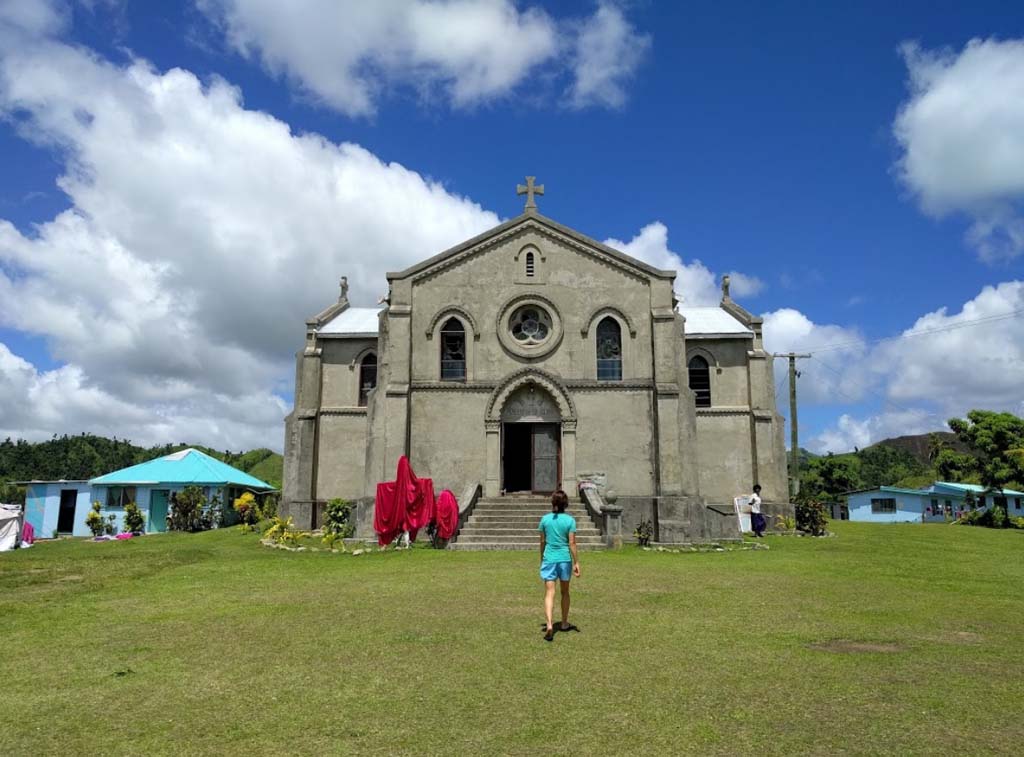
“Nabutautau village” Source: Nicholas Halter 2018
Nabutautau Village, Navatusila

The village of Nabutautau is a remote village located in the head waters of the Sigatoka River in the district of Navatusila in the province of Nadroga/Navosa. Nabutautau is infamous in history as the place where Reverend Thomas Baker was killed, the only European missionary killed in Fiji on 21 July 1867 along with five i-Taukei teaching assistants. Beyond Baker’s death, relatively little is known about the village’s rich history.

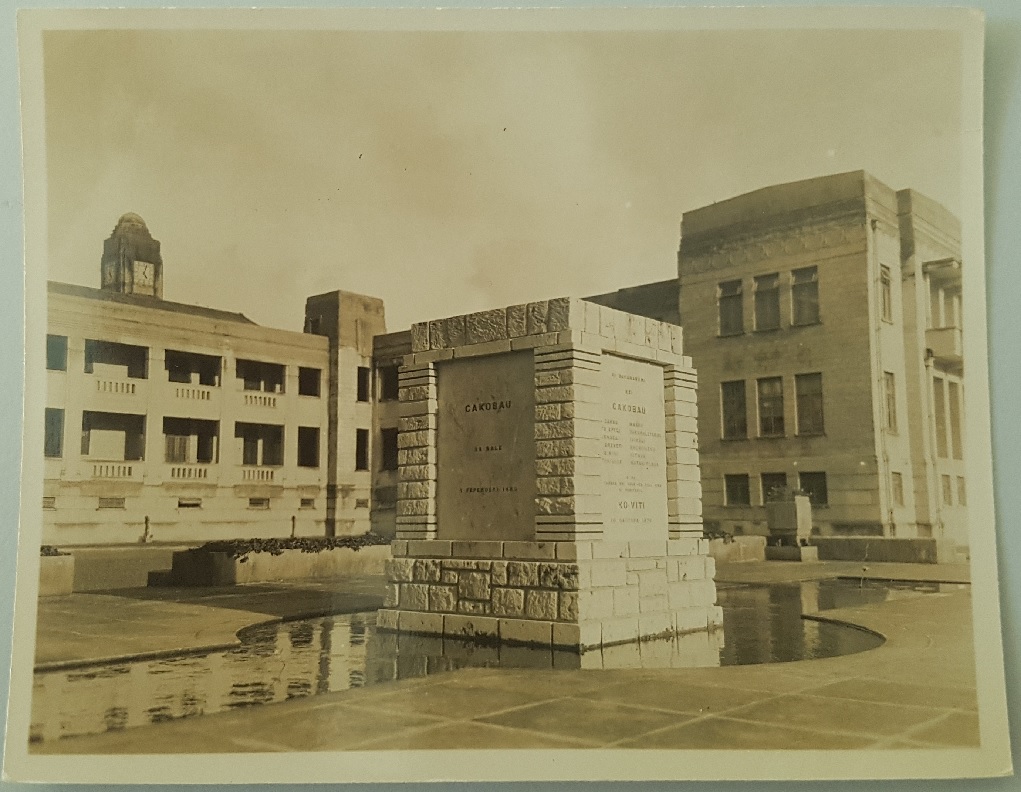
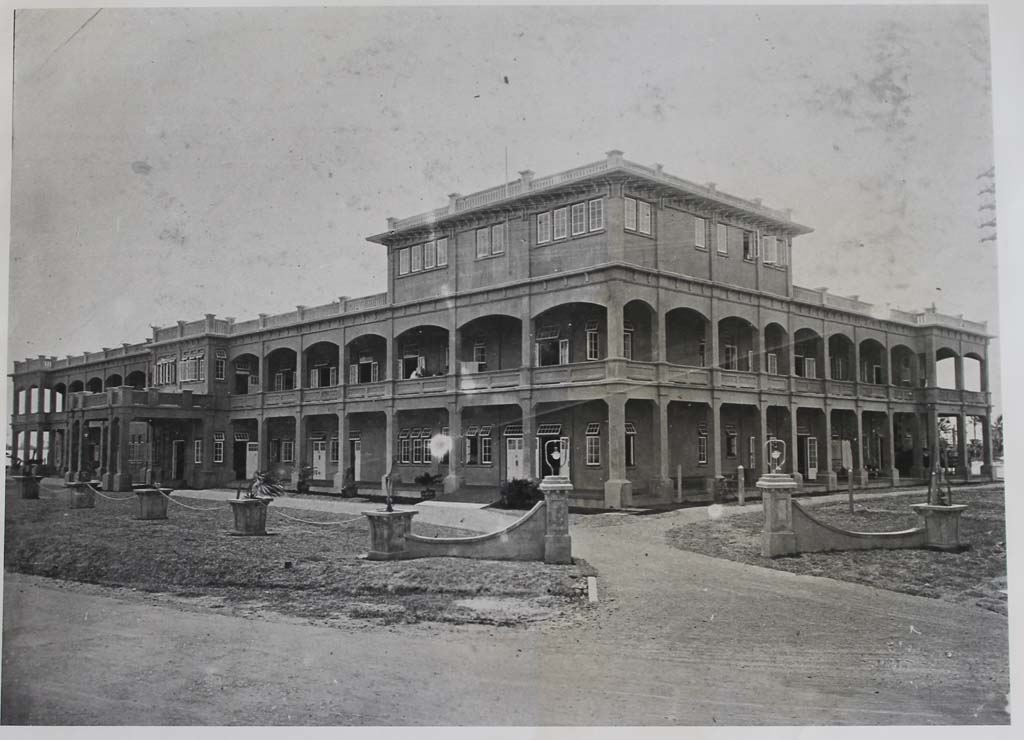
“Q.V. Memorial Hall, Suva, Fiji”, Unknown, c1904, shortly after completion. Source: Max Quanchi and Max Shekleton, An Ideal Colony and Epitome of Progress: Colonial Fiji in Picture Postcards, forthcoming.
Suva Town Hall

The Town Hall was originally named the Queen Victoria Memorial Hall when it was opened in 1905. Over a century it has hosted many tenants, including the Fiji Museum, an aquarium, a theatre and restaurants.

“Roman Catholic Cathedral, Pratt Street”, no date. Source: Fiji Museum, P32.4/41.
Sacred Heart Cathedral

The Sacred Heart Cathedral is the headquarters of the Catholic Archdiocese of Suva. The construction of the Cathedral began in 1894 and was not completed until 1994, 150 years after the first Marist missionaries arrived in Fiji. The grand European design includes sandstone blocks imported from Australia, concrete staircases and balustrades, and two towers. The central stained glass window above the altar contains an image of a bilo cup beneath the Sacred Heart of Jesus.

“Great Council of Chiefs, Waikava”. Senior members of the Great Council of Chiefs with Cakobau seated at the top of the ramp above his brother Ratu Josefa Celua. The chief to his left, wearing a white masi turban is likely Musudroka, the Vunivalu of Rewa. Waikava, Vanua Levu, Fiji. Possibly photographed by F. Dufty, December 1876. P.99842.VH Source: http://maa.cam.ac.uk/photo-great-council-of-chiefs-p-99842-vh/
Great Council of Chiefs

The Bose Levu Vakaturaga was a formal gathering of Fiji's indigenous (iTaukei) chiefs. It was established by the British Colonial Government in 1875 as an advisory body and named the Council of Chiefs (the term “Great” was added sometime later in the twentieth century). The complex at Draiba was completed in 2009 for Council meetings but was destroyed by fire ten years later. The North and South wings of the complex house the Ministry of iTaukei Affairs, Ministry of Lands and Ministry of Foreign Affairs. 

“Boys Grammar School postcard”, Co-operative (W.J.B. Stinsone), c.1930s? Source: http://www.justpacific.com/fiji/fijiphotos/grammar/bgs3.jpg
Suva Grammar School

The original Suva Grammar School was built in 1917 on Victoria Parade specifically for European boys. Girls were educated at another building on Selbourne Street a year later. Suva Grammar School is a co-ed school currently located at Nasese.

“Wreck of the Syria Memorial, Nausori” Source: Nicholas Halter 2012
Wreck of the Syria Memorial, Nausori

The monument at Nausori was built in memory of people who died aboard the Indian immigrant ship Syria when it was wrecked on Nasilai reef in 1884. It was one of the worst maritime disasters in Fiji history - 59 people died in the tragedy.

“Fijians – clothing, Village People (Suva area), probably taken during [18]80s” Source: Fiji Museum P32.4/138
Origins of Suva

The indigenous settlement of Suva was established in the early 1800s at the site of the present-day Thurston Gardens. The itaukei were forced to move to Suvavou in 1882 by European colonial powers to make room for the new capital. 

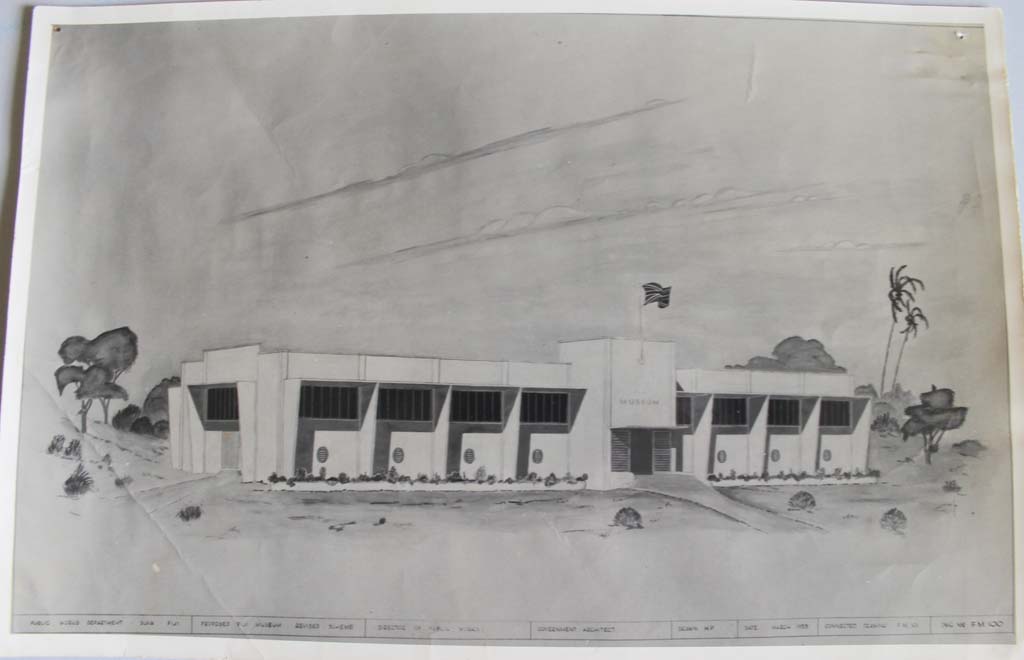
“Prospective Sketch by Mr Haus Turner? made while plans were in preparation”, c.1950s, Fiji Museum P23.1/14
Fiji Museum

The Fiji Museum was established in 1904 and has moved several times over the last century. It has been situated in Thurston Gardens since the 1950s and contains artefacts up to 3700 years old.

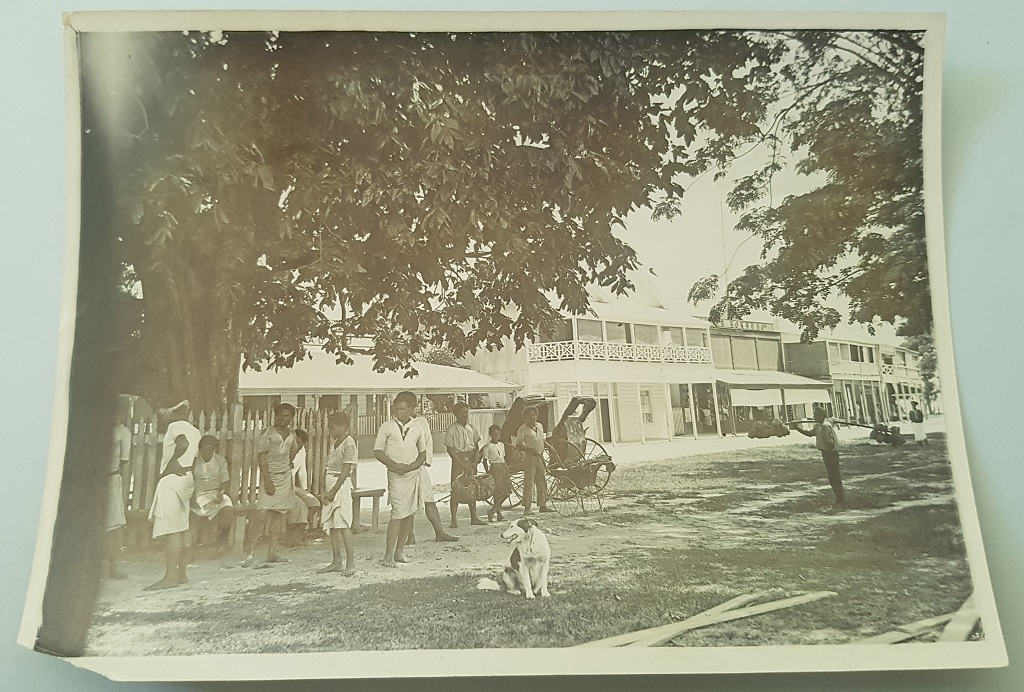
“Early Suva: Fijian market, Basil Thomson collection c1892” Source: Fiji Museum 1/2/6.13E/23
Suva Municipal Market

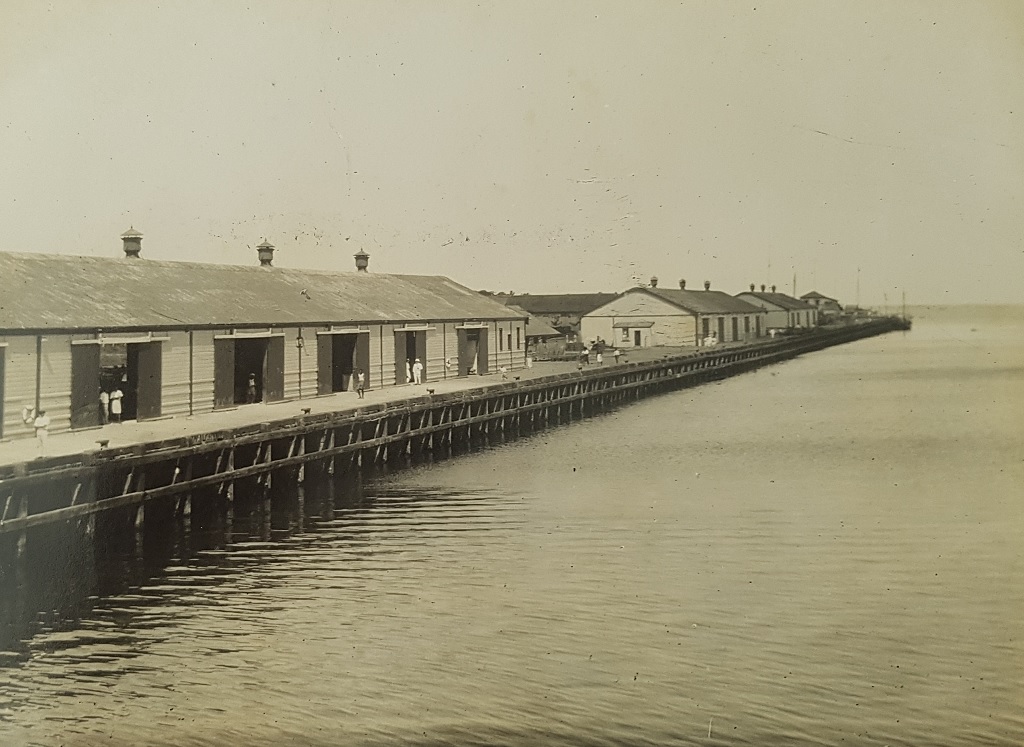
The market has been a vibrant meeting place for Suva residents and visitors to buy fresh fruit and vegetables, meat, fish, yaqona and traditional wares. The original Suva market was located near Pier Street, next to the Queen’s Wharf. It was moved to Cumming Street in the early 1900s until a new market was constructed at the present location between Harris Road and Rodwell Road in 1949.

  • ‹
  • 1
  • 2
  • 3
  • 4
  • 5
  • ›
Attribution-NonCommercial

Website content is licensed under a Creative Commons Attribution 4.0 International License. All material used on this site retains the original Creative Commons Licences and can only be re-used under their respective licences. Note that corporate logos (such as the Fijian History logo) and images used in some collections and branding are specifically excluded from the Creative Commons Attribution Licence, and may not be reproduced under any circumstances without the express written permission of the copyright holders.

Fijian History © 2018 - The University of the South Pacific
About

This project was a collaborative effort by staff and students of The University of the South Pacific to document some of the historic sites of Fiji.

Download App

Download the app from Google Play Store and browse fijian stories even when offline

Get the app on Google Play
Contact
  • Email us