FIJIANFijian HistoryHISTORY
  • Privacy Policy
  • About Us
  • ‹
  • 1
  • 2
  • 3
  • 4
  • 5
  • ›
“The burenivanua in the centre of Sorokoba. The house is the official residence of the Tui Ba. It was rebuilt according to traditional designs atop the original yavu, but with modern materials” Source: Nicholas halter 2018.
Sorokoba Village, Ba

Sorokoba is located 3km north of Ba town and is the seat of the Tui Ba (paramount chief of Ba).

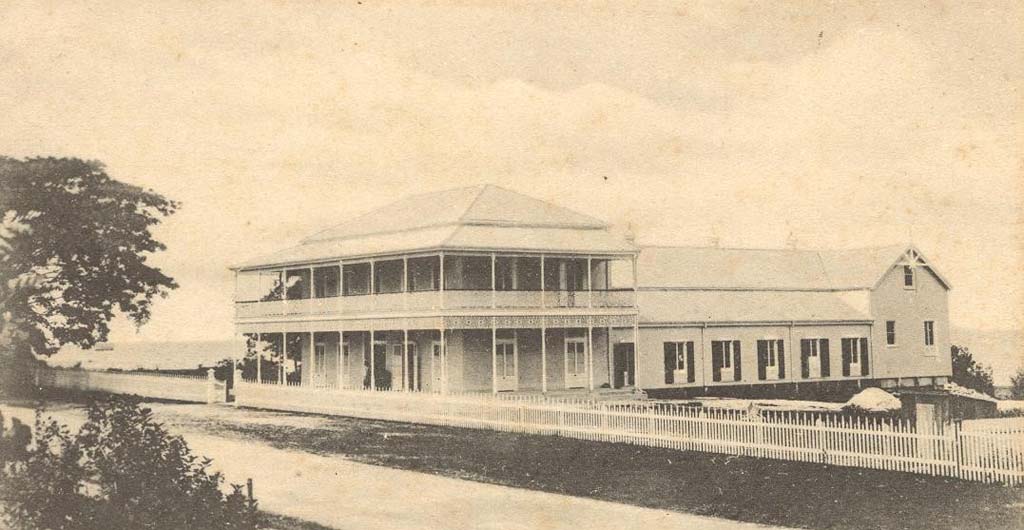
“A small child, possibly the Governor’s son, Jack, seated on a pony with two Fijian attendants in front of Government House in Nasova, Ovalau Island, Fiji”. Source: collected by A. von Hügel, 1875-77, Museum of archaeology and anthropology, P.99680.VH, http://maa.cam.ac.uk/photo-government-house-p-99680-vh/
Government House

Government House was the residence of the British Colonial Governors of Fiji since 1892 and was rebuilt after a lightning strike in 1921. Today it is known as the Presidential Palace.

"Carnegie Library, Suva, Fiji", Unknown c.1930-1954, Source: Fiji Museum P/23.1/8
Suva City Carnegie Library

The Suva City Carnegie Library was opened in 1909 and bears the name of the Scottish-born American philanthropist who funded it. It is now run by the Suva City Council and serves the Central and Eastern Divisons of Fiji.

“Artist’s rendering the Grand Pacific created for the Union Steamship Company” Source: http://grandpacifichotel.com.fj/about-us/
Grand Pacific Hotel

The Grand Pacific Hotel is one of the oldest hotels in the Pacific. It was built in 1914 to offer a more luxurious style of accommodation for cruise ship tourists. It was recently renovated and extended but it retains many of its original colonial architectural designs.  

“Early Suva: Fijian market, Basil Thomson collection c1892” Source: Fiji Museum 1/2/6.13E/23
Suva Municipal Market

The market has been a vibrant meeting place for Suva residents and visitors to buy fresh fruit and vegetables, meat, fish, yaqona and traditional wares. The original Suva market was located near Pier Street, next to the Queen’s Wharf. It was moved to Cumming Street in the early 1900s until a new market was constructed at the present location between Harris Road and Rodwell Road in 1949.

“Suva Government Buildings, Cakobau Memorial replacing obelisk at old government bldgs demolished late 40s” Source: Fiji Musuem P32.5/14
Government Buildings

Originally comprised of wooden buildings relocated from Levuka, the government buildings precinct today includes the Parliament of Fiji, the law courts and other government ministries. The art deco design was completed in 1939 and includes a unique clock tower with a dome covered in glazed tiles.

“Q.V. Memorial Hall, Suva, Fiji”, Unknown, c1904, shortly after completion. Source: Max Quanchi and Max Shekleton, An Ideal Colony and Epitome of Progress: Colonial Fiji in Picture Postcards, forthcoming.
Suva Town Hall

The Town Hall was originally named the Queen Victoria Memorial Hall when it was opened in 1905. Over a century it has hosted many tenants, including the Fiji Museum, an aquarium, a theatre and restaurants.

“Landing of the Southern Cross at Albert Park, 1928”, Source: http://suvacity.org/albert-park /
Albert Park

Albert Park was constructed as a cricket ground in the 1880s on land that once belonged to the indigenous village of Suva. It has since hosted sporting events, national celebrations, visiting dignitaries, and was the site of the first airplane landing in Fiji in 1928.

“Fijians – clothing, Village People (Suva area), probably taken during [18]80s” Source: Fiji Museum P32.4/138
Origins of Suva

The indigenous settlement of Suva was established in the early 1800s at the site of the present-day Thurston Gardens. The itaukei were forced to move to Suvavou in 1882 by European colonial powers to make room for the new capital. 

  • ‹
  • 1
  • 2
  • 3
  • 4
  • 5
  • ›
Attribution-NonCommercial

Website content is licensed under a Creative Commons Attribution 4.0 International License. All material used on this site retains the original Creative Commons Licences and can only be re-used under their respective licences. Note that corporate logos (such as the Fijian History logo) and images used in some collections and branding are specifically excluded from the Creative Commons Attribution Licence, and may not be reproduced under any circumstances without the express written permission of the copyright holders.

Fijian History © 2018 - The University of the South Pacific
About

This project was a collaborative effort by staff and students of The University of the South Pacific to document some of the historic sites of Fiji.

Download App

Download the app from Google Play Store and browse fijian stories even when offline

Get the app on Google Play
Contact
  • Email us